What is IT strategy and planning?
IT strategy and planning aligns technology decisions, investments, security, infrastructure, and future initiatives with the organization's business goals. A strong IT roadmap helps leadership prioritize what to fix, modernize, invest in, and plan for next instead of reacting to technology problems as they appear.
Too often high-growth companies find themselves stuck in a cycle of ad hoc IT solutions. These quick fixes become the go-to because they seem solve problems immediately. However, they often lead to inefficiencies and missed opportunities for growth. To truly thrive, businesses need to transition from reactive IT management to focus on IT strategy and planning that aligns with their long-term goals.
Pitfalls of Ad Hoc IT
Ad hoc IT practices are characterized by short-term, reactive solutions that address immediate issues without considering the bigger picture. These fixes can be convenient, but often lead to a fragmented IT environment, increased costs, and reduced efficiency. Over time, this approach can become a significant barrier to growth, as it prevents the IT department from contributing to the company’s strategic objectives.
Planning vs. Strategy
There are distinguishing features between planning and strategy. Planning involves setting specific goals and outlining the steps to achieve them. However, a plan alone is not enough. A strategy goes beyond planning by aligning IT initiatives with the overall business objectives. This strategic approach ensures that technology investments drive efficiency, innovation, and growth, rather than just addressing immediate needs.
A plan might say: Replace aging servers next year.
A strategy asks: Should we replace them, move the workloads to the cloud, consolidate systems, or retire applications entirely based on where the business is going?
Planning determines what gets done. Strategy determines why it should be done in the first place.
The Importance of an Organization-Wide Strategy
To be effective, an IT strategy must be organization wide. Avoiding departmental silos that can hinder collaboration and innovation is crucial. A cohesive strategy ensures that all departments work towards common goals, leveraging technology to enhance overall business performance. Successful companies often have case studies demonstrating the benefits of a unified IT strategy, showcasing improved efficiency, innovation, and growth.
Common Challenges in Developing IT Strategy and Planning
Developing a long-term IT strategy is not without its challenges. Common barriers include resistance to change, lack of alignment between IT and business goals, and limited resources. However, these challenges can be overcome with the right approach. Bridgehead, for example, specializes in helping businesses navigate these obstacles, providing tailored solutions that align IT with strategic objectives. Real-world examples highlight how overcoming these challenges can lead to significant business improvements.
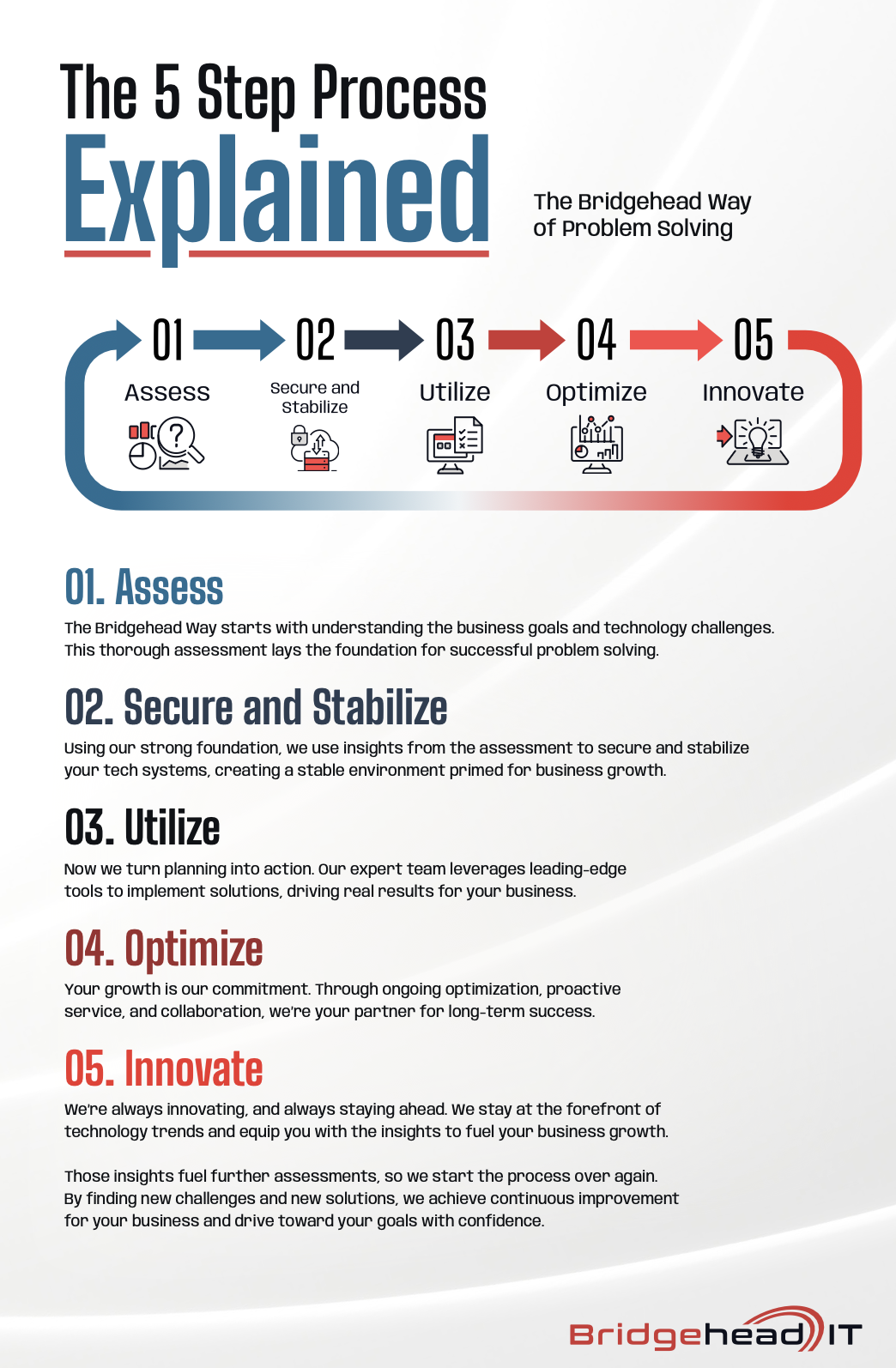
From IT Assessment to Innovation: Bridgehead's 5-Step Process
A strong IT strategy starts with understanding where you are today, then building a practical path toward where the business needs to go.
1. Assess
Evaluate the current technology environment, identify risks and gaps, and determine where technology is helping or holding back the business.
2. Secure & Stabilize
Address immediate risks, vulnerabilities, reliability issues, and foundational technology problems before adding more complexity.
3. Utilize
Make better use of the technology and capabilities already available to the organization.
4. Optimize
Improve systems, processes, integrations, and technology investments to increase efficiency and reduce unnecessary complexity.
5. Innovate
Use the stronger technology foundation to support growth, automation, AI, data initiatives, and other strategic business opportunities.
The goal isn't technology for technology's sake. It's creating a roadmap that moves the business from reactive IT decisions toward intentional growth.
The Next Steps
Transitioning from ad hoc IT solutions to a strategic IT roadmap is crucial for high-growth businesses looking to overcome barriers and achieve sustainable growth. By developing a cohesive, organization-wide IT strategy, companies can drive efficiency, innovation, and long-term success.